Friday, June 20, 2014

Smart Drugs: Special Topics in The Neurobiology of Learning/Memory I


  Smart Drugs & LTP: Enhancement of Long-term Potentiation Through Actions on AMPA-Receptor Initiation and CREB Consolidation


Unlike the previous installment, this post presumes a great deal of background knowledge on the part of its readers. My intended audience has taken a class in general biology, neuroscience, or physiology at the college level and are familiar with terms like synapse, action potential (depolarization, ion channel, electrochemical gradient), neurotransmission (axons, dendrites, receptors, ligands, inhibition (IPSP), excitation (EPSP)), neurotransmitters (especially glutamate, GABA, acetylcholine, dopamine, serotonin, epinephrine), and gene transcription/translation.
Anyone who's not conversant in biochemistry may want to take a minute and bone up on this stuff, perhaps by reading my first post or by just skimming the links above.


Drug-mediated cognitive enhancement has become a topic of great interest among researchers and laypeople alike, but still precious little is known about the neurobiology underlying our cognitive processes. Over the past two million years—a paltry interval in evolutionary time—growth of the human brain has wildly outpaced that of our closest relatives. But it is also true that these expanded cortical areas are undergirded by neural circuitry that we share with our primate, and indeed our reptilian, ancestors. Since complex phenotypes neverarise de novo, it is unlikely that human “brain plans” are in any way optimized for cognition; rather, this growth seems to be in line with an inherited simian blueprint1. All this is to suggest that presently, our brains fall far short of maximizing these recent specializations that confer human uniqueness. If this assumption is a safe one, then it follows that the current state of our cognition leaves much room for improvement.

The foregoing discussion presents an unsettling scenario fraught with both scientific and ethical dilemmata. Still, our understanding of learning and memory can be greatly enriched by a consideration of these performance enhancing drugs and their effects, both in the medically compromised and in the neurotypical. However, this post does not address the wider world of nootropic substances; my focus is limited to the effects compounds known to faciliate LTP. As long-term potentiation (LTP) is considered to be the major cellular mechanism underlying learning and memory, I seek to examine how this process can be exogenously enhanced by pharmacological tinkering at the two crucial phases of the process: the initiation of memory formation during early long-term potentiation and memory consolidation during late long-term potentiation.

                 LTP OVERVIEW: SKIP IF YOU GET IT!
Before considering the affects of a given substance on long-term potentiation, it would be prudent to give both an overview of the neuromolecular correlates of these phenomena and due homage to those who discovered them. Donald O. Hebb was a Canadian psychologist whose pioneering efforts in the field earned him the moniker “father of neural networks2.” He postulated that the efficacy of synaptic communication was dependent on activity at the synapse; that strong, repeated activation of these connections can result in lasting structural and functional changes. In his words, when an axon of cell A is near enough to excite cell B and repeatedly or persistently takes part in firing it, some growth process or metabolic change takes place in one or both cells such that A's efficiency, as one of the cells firing B, is increased2.” His idea that modifications in neural circuits were the mechanisms by which information is stored and retrieved in the brain was borne out in the research of Terje Lømo, who in 1966 discovered in the rabbit hippocampus what would come to be known as long-term potentiation3. Studies exploring the nature of this effect, along with work done by Eric Kandel on habituation and sensitization of neural circuits in Aplysia californica 4, served as a springboard for recent discoveries in the molecular basis of memory and gave the model of synaptic plasticity its modern form.

Aplysia californica, by Nordelch
Long-term potentiation is the name given to the discovery that a brief trains of high-frequency stimuli to monosynaptic excitatory pathways in the hippocampus cause a sustained increase in the efficiency of synaptic transmission5. This effect persists for hours in ex vivo hippocampal slices and for weeks in the hippocampus of living mammals. LTP is commonly divided into two phases—early LTP and late LTP—each consisting of three processes: induction, maintenance, and expression6. In such a monosynaptic excitatory pathway, a stimulus causes presynaptic release of glutamate onto the postsynaptic cell membrane where it binds to α-amino-3-hydroxy-5-methyl-4-isoxazolepropionicacid (AMPA) receptors. This triggers the influx of sodium cations into the postsynaptic cell, effecting an excitatory postsynaptic potential through depolarization. High frequency stimulation of this sort results in EPSP summation and greater depolarization of the postsynaptic cell. If sufficient, this depolarization causes the ejection of Mg2+ from the ion channel of N-methyl-D-aspartate (NMDA) receptors, effectively unblocking them. Now, if these receptors are also bound by glutamate released from the presynaptic cell, they become active and allow Ca2+ to flow into the postsynaptic cell. This rapid rise in intracellular calcium concentration is the pivotal step for subsequent signaling cascades; it activates several enzymes that mediate early LTP induction such as Ca2+/calmodulin-dependent protein kinases II(CaMKII), protein kinase C (PKC), and to a lesser extent proteinkinase A (PKA) and Mitogen-activated protein kinase K (MAPK)6. All kinases are enzymes that affect the state of a molecule (changing its activity, reactivity, or binding ability) by simply sticking a phosphate group on it; they serve many important functions in the regulation of complex cellular processes. Through persistent activation of these kinases (particularly CaMKII and PKC), existing AMPA receptors are phosphorylated (activated) and additional AMPA receptors are inserted into the postsynaptic membrane, both of which increase postsynaptic response to released glutamate so future excitatory stimuli generate larger postsynaptic potentials. In addition, CaMKII may lead to the synthesis of a retrograde messenger that acts to increase presynaptic neurotransmitter vesicle number, probability of vesicle release, or both6. The process described above accounts for the few hours of LTP observed in ex vivo hippocampal tissue. Functional modification of the circuit must rely on changes in protein synthesis or alterations in the rate of synthesis and degradation of proteins already present.
The late phase of LTP is induced by changes gene transcription and protein synthesis brought about by the persistent activation of protein kinases activated during early LTP, such as MAPK1; 6. This process is necessary for memory formation; it has been show in many studies that  inhibition of protein synthesis disrupts late LTP7. PKA activation and calcium influx converge on CRTC1, a potent transcription factor for cAMP response element binding protein(CREB). Through phosphorylation-dependent activation this molecule affects the transcription of many genes, including genes encoding other transcription factors8 and genes involved in synaptic plasticity9. CREB-mediated transcriptional activity is important in habituation and sensitization as well10 and is a good candidate for mediating the molecular switch to long-term memory. Research continues to suggest that CREB plays an important role in memory formation and retrieval.

This brief description of LTP belies its complexity and diversity; in truth, much about it remains to be discovered and the list of potential modulators (molecules that can alter LTP but are not essential for it) is ever-growing. For instance, beta-adrenergicreceptor agonists, nitric oxide synthase, and estradiol have all been proposed to have an effect on LTP6. What follows will be limited to a consideration of the known effects of certain drugs on AMPA receptors and CREB-mediated transcriptional activity in NMDA receptor-dependent hippocampal LTP.

SUBSTANCES THAT AFFECT LTP
To achieve an enhancement of memory through a direct effect on LTP, a drug can act at either the early phase or the late phase of the process described above. In the case of the early phase, the ionotropic glutamatergic receptors are obvious targets for these drugs. A class of pyrrolidine-derived compounds known as racetams bind to modulator sites on the AMPA receptor, including the cyclothiazide site, and have been found to have a positive effect on memory11. Piracetam is the most well-known racetam and was the first of this class of molecules to be discovered12. In cultured neurons, it enhances the Ca2+ influx produced by the AMPA receptor but not that produced by the NMDA receptor13. In electrophysiological studies it increases the peak amplitude of the ion current generated through AMPA receptors, reduces it rate of decay, and increases the maximal density of low-affinity binding sites for AMPA in the postsynaptic membrane13. It also increases muscarinic cholinergic receptor density in the frontal cortex of mice and has the general effect of activating the cholinergic system14. Given the dual action of the these compounds, choline and piracetam administered together have been shown to substantially improve memory in dementia patients15. Indeed, a reduction in the activity of cholinergic neurons is a well-known feature of Alzheimer's disease, and several modern treatments for mild to moderate Alzheimer's are based on increasing the concentration of acetylcholine in the brain. Piracetam alone has been shown to effectively overcome amnesia induced by scopolamine, diazepam, and electroconvulsive shock through actions on the hippocampus16. Aniracetam, a second member of the racetam family, has been known to improve cognitive functions impaired in rodents by experimental procedures since the early 1980s17. It facilitates LTP in the same way as piracetam, slowing entry of AMPA receptors into a desensitized state and increasing excitatory synaptic strength18, but it also seems to enhance cortical GABA-mediated inhibition19. Aniracetam facilitates LTP in hippocampal tissue20, has improved performance of rhesus monkeys in delayed match-to-sampletasks21, and reverses learning impairment in rodents22.

Ampakines
, close relatives of the racetam family, were the first allosteric modulators of AMPA receptors found to be able to augment excitatory transmission in the brain20; 23. They consist of thiazide derivatives and unlike their parent compound they are able to cross the blood-brain barrier to bind to the cyclothiazide binding site of the AMPA receptor, slowing receptor desensitization and deactivation. Since racetams and ampakines are allosteric modulators, they affect only AMPA receptors activated by endogenous transmitter and thereby restrict their influence to regions that are engaged in brain activity24. Ampakines have also been found to induce the expression of neurotrophin genes, such as growth factors like BDNF20. They have also been found to improve delayed recall in aged individuals and to facilitate memory encoding generally25; 26. In all, racetams and ampakines act similarly to slow deactivation and attenuate desensitization of AMPA receptor currents, increase synaptic responses, and enhance long-term potentiation.
In the late phase of LTP, the transcription factor CREB has been shown to be crucial to memory consolidation—its loss of function results in an impairment of long-term memory, while increases in CREB activity enhance long-term memory; importantly CREB activity does not seem to affect short-term memory27. CREB-dependent gene expression is mainly regulated through phosphorylation and through chromatin remodeling27; 28. Inhibition of phosphodiesterase (PDE) activity leads to increases in cAMP or cGMP levels, which drives CREB phosphorylation and activation through increases in protein kinase activity . Whether cAMP or cGMP is increased depends on the phosphodiesterase—PDE4 inhibition increases cAMP levels while PDE5 inhibition increases cGMP levels29. The prototypical PDE4 inhibitor is rolipram, which leads to CREB phosphorylation and CREB-dependent gene transcription though activation of PKA30. In animal models, rolipram has been shown to facilitate memory formation by increasing CREB phosphorylation.29
 
Epigenetic chromatin remodeling and modifications of DNA represent central mechanisms for regulation of gene expression during memory formation. In order for gene expression to take place, chromatin must be unpacked to expose DNA regulatory sequences to transcription factors such as CREB31. A primary mechanism for attaining the chromatin state required for transcriptional activity is histone acetylation, which depends on the relative activities of enzymes histone-acetyl transferase (HAT) and histone deacetylase (HDAC). To promote long-term memory related gene expression, CREB requires a coactivator called CREB binding protein (CBP). This coactivator possesses histone acetyl-transferase activity required for transcription32. CBP histone acetyl-transferase activity is an important component in memory consolidation; truncated CBP protein in transgenic mice significantly reduced late-phase LTP in hippocampal slices. These mice also exhibited behavioral deficits in two hippocampus-dependent tasks: spatial learning in the Morris watermaze and long-term memory for contextual fear conditioning. Corroborating these findings, it has been shown that elevated levels of histone acetylation through the use of HDAC inhibitors such as sodium butyrate enhances induction of long-term potentiation at Schaffer-collateral synapses in the hippocampus in vitro as well as long-term memory formation in a contextual fear conditioning paradigm33.
An examination of two well-characterized steps in the process of long-term potentiation has recommended three key processes through which its enhancement could be mediated: AMPA receptor modulation, phosphodiesterase inhibition, and histone deacetylase inhibition. The compounds promoting these processes have the potential to be therapeutically valuable in cases of cognitive impairment. This is illustrative of just how labile the processes underlying our behavioral memory actually are.

1. Finlay, B. L., Darlington, R. B. & Nicastro, N. (2001). Developmental structure in brain evolution. Behavioral and Brain Sciences 24, 263-+.
2. Brown, R. E. & Milner, P. M. (2003). Timeline - The legacy of Donald O. Hebb: more than the Hebb synapse. Nature Reviews Neuroscience 4, 1013-1019.
3. Lomo, T. (2003). The discovery of long-term potentiation. Philosophical Transactions of the Royal Society of London Series B-Biological Sciences 358, 617-620.
4. Pittenger, C. & Kandel, E. R. (2003). In search of general mechanisms for long-lasting plasticity: Aplysia and the hippocampus. Philosophical Transactions of the Royal Society of London Series B-Biological Sciences 358, 757-763.
5. Bliss, T. V. P. & Collingridge, G. L. (1993). A SYNAPTIC MODEL OF MEMORY - LONG-TERM POTENTIATION IN THE HIPPOCAMPUS. Nature 361, 31-39.
6. Sweatt, J. D. (1999). Toward a molecular explanation for long-term potentiation. Learning & Memory 6, 399-416.
7. Frey, U. & Morris, R. G. M. (1997). Synaptic tagging and long-term potentiation. Nature 385, 533-536.
8. Shaywitz, A. J. & Greenberg, M. E. (1999). CREB: A stimulus-induced transcription factor activated by a diverse array of extracellular signals. Annual Review of Biochemistry 68, 821-861.
9. Pfenning, A. R., Schwartz, R. & Barth, A. L. (2007). A comparative genomics approach to identifying the plasticity transcriptome. Bmc Neuroscience 8, 18.
10. Waddell, S. & Quinn, W. G. (2001). Flies, genes, and learning. Annual Review of Neuroscience 24, 1283-1309.
11. Sara, S. J., Davidremacle, M., Weyers, M. & Giurgea, C. (1979). PIRACETAM FACILITATES RETRIEVAL BUT DOES NOT IMPAIR EXTINCTION OF BAR-PRESSING IN RATS. Psychopharmacology 61, 71-75.
12. Giurgea, C. (1972). Pharmacology of integrative activity of the brain. Attempt at nootropic concept in psychopharmacology. Actualites pharmacologiques 25, 115-56.
13. Nicoletti, F., Casabona, G., Genazzani, A. A., Copani, A., Aleppo, G., Canonico, P. L. & Scapagnini, U. (1992). Excitatory amino acids and neuronal plasticity: modulation of AMPA receptors as a novel substrate for the action of nootropic drugs. Functional neurology 7, 413-22.
14. Pepeu, G. & Spignoli, G. (1989). NOOTROPIC DRUGS AND BRAIN CHOLINERGIC MECHANISMS. Progress in Neuro-Psychopharmacology & Biological Psychiatry 13, S77-S88.
15. Bartus, R. T., Dean, R. L., Sherman, K. A., Friedman, E. & Beer, B. (1981). PROFOUND EFFECTS OF COMBINING CHOLINE AND PIRACETAM ON MEMORY ENHANCEMENT AND CHOLINERGIC FUNCTION IN AGED RATS. Neurobiology of Aging 2, 105-111.
16. Lenegre, A., Chermat, R., Avril, I., Steru, L. & Porsolt, R. D. (1988). SPECIFICITY OF PIRACETAM ANTI-AMNESIC ACTIVITY IN 3 MODELS OF AMNESIA IN T HE MOUSE. Pharmacology Biochemistry and Behavior 29, 625-629.
17. Cumin, R., Bandle, E. F., Gamzu, E. & Haefely, W. E. (1982). EFFECTS OF THE NOVEL COMPOUND ANIRACETAM (RO 13-5057) UPON IMPAIRED LEARNING AND MEMORY IN RODENTS. Psychopharmacology 78, 104-111.
18. Vyklicky, L., Patneau, D. K. & Mayer, M. L. (1991). MODULATION OF EXCITATORY SYNAPTIC TRANSMISSION BY DRUGS THAT REDUCE DESENSITIZATION AT AMPA KAINATE RECEPTORS. Neuron 7, 971-984.
19. Ling, D. S. F. & Benardo, L. S. (2005). Nootropic agents enhance the recruitment of fast GABA(A) inhibition in rat neocortex. Cerebral Cortex 15, 921-928.
20. Arai, A. C. & Kessler, M. (2007). Pharmacology of ampakine modulators: From AMPA receptors to synapses and behavior. Current Drug Targets 8, 583-602.
21. Buccafusco, J. J., Weiser, T., Winter, K., Klinder, K. & Terry, A. V. (2004). The effects of IDRA 21, a positive modulator of the AMPA receptor, on delayed matching performance by young and aged rhesus monkeys. Neuropharmacology 46, 10-22.
22. Martin, J. R., Moreau, J. L. & Jenck, F. (1995). ANIRACETAM REVERSES MEMORY IMPAIRMENT IN RATS. Pharmacological Research 31, 133-136.
23. Staubli, U., Ambrosingerson, J. & Lynch, G. (1992). RECEPTOR CHANGES AND LTP - AN ANALYSIS USING ANIRACETAM, A DRUG THAT REVERSIBLY MODIFIES GLUTAMATE (AMPA) RECEPTORS. Hippocampus 2, 49-58.
24. O'Neill, M. J. & Witkin, J. M. (2007). AMPA receptor potentiators: Application for depression and Parkinson's disease. Current Drug Targets 8, 603-620.
25. Davis, C. M., Moskovitz, B., Nguyen, M. A., Tran, B. B., Arai, A., Lynch, G. & Granger, R. (1997). A profile of the behavioral changes produced by facilitation of AMPA-type glutamate receptors. Psychopharmacology 133, 161-167.
26. Ingvar, M., AmbrosIngerson, J., Davis, M., Granger, R., Kessler, M., Rogers, G. A., Schehr, R. S. & Lynch, G. (1997). Enhancement by an ampakine of memory encoding in humans. Experimental Neurology 146, 553-559.
27. Tully, T., Bourtchouladze, R., Scott, R. & Tallman, J. (2003). Targeting the CREB pathway for memory enhancers. Nature Reviews Drug Discovery 2, 267-277.
28. Rose, G. M., Hopper, A., De Vivo, M. & Tehim, A. (2005). Phosphodiesterase inhibitors for cognitive enhancement. Current Pharmaceutical Design 11, 3329-3334.
29. Blokland, A., Schreiber, R. & Prickaerts, J. (2006). Improving memory: A role for phosphodiesterases. Current Pharmaceutical Design 12, 2511-2523.
30. Arnsten, A. F. T., Ramos, B. P., Birnbaum, S. G. & Taylor, J. R. (2005). Protein kinase A as a therapeutic target for memory disorders: rationale and challenges. Trends in Molecular Medicine 11, 121-128.
31. Santos, M., Coelho, P. A. & Maciel, P. (2006). Chromatin remodeling and neuronal function: exciting links. Genes Brain and Behavior 5, 80-91.
32. Bannister, A. J. & Kouzarides, T. (1996). The CBP co-activator is a histone acetyltransferase. Nature 384, 641-643.
33. Levenson, J. M. & Sweatt, J. D. (2006). Epigenetic mechanisms: a common theme in vertebrate and invertebrate memory formation. Cellular and Molecular Life Sciences 63, 1009-1016.


Wednesday, June 18, 2014

Base-10 Blocks to a Billion!

Everybody who went to public elementary school in the USA after the mass production of plastics (1940s and 1950s) knows what these things are:

http://www.smartfirstgraders.com/image-files/base10blocks-color.jpg

In case any readers do not meet the above criterion, these blue (sometime orange) plastic blocks are manipulatives used in classrooms to help teach children all sorts of mathematical concepts, from addition and subtraction to place value and volume. The smallest discrete unit is 1 cm3 and represents the one's place: 10 of these singletons form a stick (sometimes called a "long") of 10 cm3  that represents the ten's place, 10 "longs" make a "flat" of 100 cm3 representing the hundred's place, and 10 "flats" make the largest commercially sold denomination, the big cube of 1000 cm3 (called a "block") representing the thousands place.


I work as a mathematics tutor with K-12 kids of all ability levels; we use these blocks as a visual aid to understanding extremely important mathematical concepts such as counting, thinking in groups, place value, the base-10 system, and even exponents. For instance, start with the "unit" (1), multiply it by 10 to get the "long" (10), multiply that by 10 again to get the "flat" (100), multiply that by 10 again to get the "block" (1000)...

One child asked me the other day how big 1,000,000 would be using these blocks. I really wanted to show him, but we only have one "block" (the big 1000 cm3 guy) and saying "1000 times as big as this" really doesn't cut it. I told him to imagine that we now take the big 1000-cube (1000 cm3) and pretend it's the unit cube. First, we need to build a "long" from these, so how many 1000-cubes do we need? "10." Good, now, 10 of these 1000-cubes is how many units total? He said, "10 thousand?" I said, yes, exactly! Now that we have a long made of 1000-cubes, how many longs do we use to make a flat? He said, "10." OK, great! Each flat is how many longs? He said, "10." And each long is how many 1000-cubes? "10." So 10 tens makes how many 1000-cubes? He said, "100 1000-cubes!" Awesome! How many units is that? He said (after a pause) "100,000 units". Now how many flats make a block? "10". Good, so we just need ten of these flats; each flat is worth 100 thousand, so 10 of them is how much. He said, after another pause "10 hundred thousand?" I said well, when you have 10 hundred thousands, what do you actually have? You know 700 thousand, 800 thousand, 900 thousand... right? What's next? "1 million!" he said triumphantly.

Students always ask, "how big do you think that would be" and, try as I might, they never seem satisfied with my answer ("bigger than you are")! So I made a huge picture to illustrate what happens if you used these base ten blocks to build up to a billion. Here it is, in all it's glory (click to zoom: it's massive):


https://upload.wikimedia.org/wikipedia/commons/2/24/Base_Ten_Blocks_to_a_Billion.png


In case it doesn't load, here's a few cut out zoom shots to demonstrate:

 Here's a 174 cm (~5'7") tall figure to scale with the 1 cm3 base ten block. The million cube (1 cubic meter) is only 100 cm tall (106 = 1003= 100x100x100 = 1,000,000), or about 3.3 feet (1 meter). So, not quite as tall as they are: WolframAlpha's growth curves show that the average 7-year old male is already ~40 inches tall). Still, "as big as you are" definitely holds, per unit volume! The average volume of an adult human, measured by water displacement, is 66,400 cm3...almost 1/200th (0.005) of the million cube!


 This shows the billion cube on the far left, with the same human figure to scale (the picture above it is the cut-out indicated by the red rectangular border. Woah! The billion cube is enormous! It's 1000 cubic meters, or a cubic decameter. Now it's 1,000 cm tall, or as tall is the highest Olympic diving platform(10 m, ~33 ft) because (103)3 = 109 = 10003 = 1000x1000x1000 = 1,000,000,000.

For comparison, if you drilled a hole in the billion cube and filled it with soda, you would need exactly 1,000,000 one liter bottles. If the average school classroom is 25ft x 25ft x 10ft (seems reasonable), then that's 6250 ft3 in volume, which is ~176,980,291 cm3. Since that goes in to a billion about ~5.6 times, you could fit five typical classrooms in the volume of the billion cube! If only they sold them that big!
That's the neat thing about exponents; all we've really done here is taken 1 thing, a little plastic cube 1 cm3, multiplied it by 10 just 9 times, and boom, 109 = 1 billion cm3.

Monday, June 16, 2014

Miles and Miles!

This post considers the mile. You know, the unit of distance. 5,280 feet... 1,760 yards... 8 furlongs of 660 feet a piece... Have you ever thought about how nicely divisible our mile is? I have two principal goals in writing this post; they are, in ascending order of importance, (1) to talk about the history of the mile, and (2) to demonstrate an effective algorithm for finding all the factors of a number.


The USA's ubiquitous distance measure dates back to 1593, during the reign of Queen Elizabeth I, where it was formalized by an English Act of Parliament.
Sure, there were things called "miles" before then: the term originates from the Latin word millia, meaning "thousand", and has cognates in many languages (e.g., Ger. meile, Dut. mijl, Old Eng./Swed./Nor. mil, Rus. milha...). This rich provenance comes from the fact that the Roman Empire used a unit of measured called the mille passuum, Latin for "one thousand paces", which was equivalent to about 4851 modern feet.

Hilariously, the USA changed the definition of the yard in 1893 with the Mendenhall Order to be based on metric standards instead of the customary English measurements. In 1834, when the UK Houses of Parliament were destroyed in a fire, the official "yard" and "pound" were torched withal and the new copies made to replace them were unstable and kept changing sizes. Around the same time the International Bureau of Weights and Measures was established in France, recommending the highly stable and less arbitrary meter- and kilogram- standards. So in 1866, Congress passed a law which allowed (but did not require) the use of the metric system. Unfortunately, the definition of a yard was also changed, so that 1 yard = 3600/3937 (0.9144018288) meters, a change which differs from the international standard of 1 yard = 0.9144 meters by about 3.2 millimeters per mile. This may not sound like much---one international mile (1,609.344 km) is exactly 0.999998 of a US mile (1,609.347219 km)---but the accumulated differences can be significant.

Anyway, enough of that. Let's factor 5280. Remember factor trees?

  5280
    /  \
  3   1760
        /  \
       2  880
            /  \
           2  440
                /  \
               2   220
                     /  \
                    2   110
                          /  \
                         2  55
                             /  \
                            5  11

Clearly a mile can be evenly split into halves, thirds, fourths, fifths, sixths, eighths, tenths, elevenths, twentieths...

To find ALL of the factors of a number systematically, we write the prime factorization (the bolded factors above) using exponents:
31 x 25 x 51 x 111

To find the total number of factors, just add one to each exponent and multiply them together. Thus, 5280 has (1+1)(5+1)(1+1)(1+1)=(2)(6)(2)(2)=48 factors!

To find out all 48 distinct factors, we have to find all unique combinations of the above prime factors: we will have all the prime factors (#1, below), all the products of two primes (#2, 4C2+1), all the products of three primes (#3), all products of four primes (#4), all products of five primes (#5), all products of six primes (#6), all products of seven primes (#7) and only one product of eight primes (#8), 2x2x2x2x2x3x5x11=5280.

#1:
      = 3, 2, 5, 11
#2:    22, (2x3), (2x5), (2x11), (3x5), (3x11), (5x11)
       = 4, 6, 10, 22, 15, 33, 55
#3:    23, (22x3), (22x5), (22x11), (2x3x5), (2x3x11), (2x5x11), (3x5x11)
       = 8, 12, 20, 44, 30, 66, 110, 165
#4:    24, (23x3), (23x5), (23x11), (22x3x5), (22x3x11), (22x5x11), (2x3x5x11)
       = 16, 24, 40, 88, 60, 132, 220, 330
#5:    25, (24x3), (24x5), (24x11), (23x3x5), (23x3x11), (23x5x11), (22x3x5x11)
       = 32, 48, 80, 176, 120, 264, 440, 660
#6:    (25x3), (25x5), (25x11), (24x3x5), (24x3x11), (24x5x11), (23x3x5x11)
       = 96, 160, 352, 240, 528, 880, 1320
#7:    (25x3x5), (25x3x11), (25x5x11), (24x3x5x11)
       = 480, 1056, 1760, 2640
#8:    (25x3x5x11)
       = 5280
 ...and don't forget 1!

But in choosing the mile to have 5280 feet, it turns out we could've done better! In 1915, the mathematician Ramanujan formalized the concept of a highly composite number (HCN) as a positive integer with more divisors than any smaller positive integer. For example, if we had defined a mile to consist of 5,040 feet (a HCN), we would have 60 factors with 240 fewer feet. We would lose divisibility by 11, but we would gain divisibility by multiples of 7 and 9, perhaps more a more useful quality. Also, 5040 is a factorial (7! = 7x6x5x4x3x2x1 = 5040), equal to 10C4 (10x9x8x7=5040) , a superior highly composite number, and a colossally abundant number. The number 2,520 (it too has 48 factors) would've been a good choice as well. In fact, it is the smallest number divisible by all of the numbers 1-12 not including 11. Unfortunately, the smallest number that is divisible by all numbers 1-12 including 11 is 11x2520=27,750... not a very practical number for measurement purposes.

So, all told, the mile is pretty good! It's divisible by 48 different numbers and it has some quirky history. 5040 is a much cooler number, but oh well: the USA should be adopting the metric system soon. In fact, according to the CIA Factbook, the US is one of only three countries that has not adopted the metric system as their official system of weights and measures (Burma and Liberia are the other two).


Saturday, June 14, 2014

How Caffeine Does the Things It Does.

 I waste a lot of time preparing and drinking coffee. My coffee ritual (cleaning the press, filling it anew, boiling water, brewing, plunging the grounds, &c.) takes around 3 minutes, and I perform this holy rite 2-3 times each day. Reckoning roughly, at this rate I spend ~48 hours --two full days out of each year-- making coffee, and this figure likely an underestimate...

Worse still, I don't even notice the caffeine anymore! I simply don't feel it! And as a heavy coffee drinker since high school, I've had plenty of time to brood over the diminishing pharmacological returns on my consumption. My religious caffeination is just another meaningless sacrament, about as effective as praying, sacrificing a bull, or eating a communion wafer.

Still, the Cult of Caffeine has far more adherents than any competing religion: in North America, 90% of adults consume the drug daily. The trouble is that, as with any other substance that confers desirable sensations, the body has a maddening way of adjusting its normalcy to account for these effects. Thus, your new baseline "normal" feeling now requires the 200 or so milligrams of caffeine in your morning cuppa, without which you would feel an emptiness, a sleepiness, and perhaps an angriness! Basically, you have created a world in which you have to go out of your way to guzzle two hot mugsworth of strange black fluid just to feel like yourself in the morning!

But what is it doing to us?

In drug parlance, we have developed a tolerance (specifically, a pharmacodynamic tolerance), but more on this in a minute! In the first place, why does drinking a bitter bean derivative perk us up at all? If your knowledge of neurons is wanting, you might consider stopping to peek at my post on the basics of neurotransmission.

You may recall from your studies that neurotransmitters come in two broad classes based on their net effects: those that stimulate activity in the central nervous system (excitatory, e.g., glutamate) and those that suppress activity (inhibitory, e.g., GABA). Well, caffeine achieves its stimulant ends not by turning up the excitation, but by turning down the inhibition. Adensosine, a widespread inhibitory neurotransmitter which suppresses neuronal activity, increases throughout the day and this accumulation is thought to be responsible for the drowsiness we feel after prolonged mental activity, e.g., at night. Caffeine wakes us up by blockading these sleep-inducers: it happens to be so structurally similar to adenosine that it binds easily to adenosine's receptors, blocking them from adenosine without activating them and thereby preempting its soporific effects. At high doses, caffeine will even inhibit GABA neurotransmission, leading to anxiety and rapid heart beat.

Adenosine has many important functions throughout the body. Remember ATP, the molecular fuel that powers almost all known biological processes, from DNA/RNA/protein synthesis to cell division? In addition to this crucial role in organismic infrastructure, adenosine's suppressive effects are thought to protect the brain by slowing it down at non-peak times and by increasing blood flow to places where it is needed. The effects of caffeine usage on learning and memory are well-studied, but the results have been largely inconclusive.

Tolerance

So caffeine swoops into our synapses and blocks adenosine's sleep-inducing receptors, thereby keeping us awake and alert. Perfect! But our bodies are champions of self-regulation, working around the clock to counter-act disturbances in the name of homeostasis. Since caffeine is just an external disturbance to our physiology, the body tries hard to negate its effects. Because caffeine limits adenosine's activity by blocking its receptors, the body fights back by creating that many more adenosine receptors. Now, you've got a ton of these receptors in your system, making you hypersensitive to adenosine; without your usual amount of caffeine blocking its usual number of these receptors, adenosine will be able to bind everywhere. Your body has come to expect that caffeine will always block a given number of receptors, and it has increased the number of receptors accordingly, so that adenosine can continue to play its typical role. Now, for caffeine to have a stimulant effect, you have to increase your intake above and beyond your usual amounts; don't worry though, because homeostasis will catch up with your perturbances before you know it.

In general, tolerance is the reduced response to repeated administration of the same dose, or an increase in the dose required to produce the same magnitude of response; it seems that most substances that humans find "addictive" operate in this fashion. This increased tolerance not only completely negates the stimulatory effects of caffeine; further, it increases the withdrawal symptoms once caffeine intake stops. Now, with loads of adenosine receptors, you are far more sensitive to the effects of adenosine and will feel tired all the time, at least until homeostasis catches up with you and removes these extra receptors. Caffeine tolerance develops very quickly. Tolerance to the sleep disruption effects of caffeine were seen after consumption of 400 mg of caffeine 3 times a day for 7 days, whereas complete tolerance was observed after consumption of 300 mg 3 times a day for 18 days.

This post has been a depressing one to write: I've learned that I waste at least 48 hours a year, and no telling how much money (probably in the neighborhood of $200), consuming a drug just to feel normal. I could stop altogether... but then I'd have to suffer through several unproductive days of feeling like a zombie trainwreck. Well, at least I'm being honest with myself about it!

Wednesday, June 4, 2014

Introduction to the Neurochemical Foundations of Learning and Memory for Non-Science Majors

This first in a series of posts about the biology of learning and memory has been written plainly, with much care taken to ensure its general-audience accessibility. 

TL;DR: neurons communicate with other neurons by releasing chemicals called neurotransmitters onto them; these chemicals bind to receptors on the neighboring neurons. When a neuron repeatedly "fires" on another neuron, this triggers the latter to produce additional receptors and can even stimulate physical growth toward the former; thus, the latter becomes especially sensitive to the former and more likely to fire when the former does. This increased association, called LTP, can last a while, but it can also be extinguished.

In your brain, as in my brain, as in a sea slug's brain, connections between neurons get strengthened (or weakened) over time in response to increases (or decreases) in their activity. This strengthening of connections through repeated use is called Long Term Potentiation (LTP), a process which forms the neurochemical foundations of learning and memory. And while it is not too difficult to begin to understand, though it does require some background in biology to really grok the significance of the thing.

To get a handle on LTP, you have first to understand a bit about "electrochemical gradients." You probably remember from chemistry that atoms can have a positive or negative charge when the number of protons (+) and electrons (-) are not equal. This is all "electrochemical" means here: these atoms (or molecules) with a net charge (+/ - ) are called ions and basically serve as chemical carriers of electricity. Everything we do is controlled by these electrical signals running through our bodies. Your thoughts, your emotions, your heartbeat, everything!

Now, you may rightly suspect that negatively charged molecules will attract positively charged molecules (and repel other negatively charged molecules). E.g., table salt is made up of two ions--sodium (Na+) and chloride (Cl-) stuck together like a opposing poles of a magnet.  But what if we could somehow work against this attractive tendency and separate the two charges? Imagine we put all the (+) charges on one side of a wall and forced all the (-) charges to stay on the other side; this is analogous to holding two bar magnets close together, (+) to (-), but not letting them touch. 

Just like damming up a river, this artificial impediment to the natural order (equal mixture of +/- charges) sets up a "gradient". Like a ball being held on a steeply graded incline, the (+) want to flow "down" toward the (-), and likewise the (-) toward the (+), resulting in some serious "potential" to do work. When given the opportunity (say, by opening a door), the positive and negative charges will rush to the other side until the number of (+) and (-) charges are distributed equally throughout. This tendency to equalize the charges in space is fundamental principle of electrochemical gradients.

OK, now that all of the charges are spread out evenly on both sides of our wall, imagine for a moment that we take all of these charged molecules and put them all on one side of the wall, leaving nothing on the other side, and shut the door. There is no electrochemical gradient now; the net charges on either side of our wall should be zero (assuming the +/- charges exactly cancel each other out). But there is still a gradient! This time, we have created a concentration gradient; the natural state of the system is to be evenly spread out in space on either side of the wall, but we have concentrated all of our molecules in only half of the available space. If we again open our door, the molecules will spread out to achieve equal concentrations on either side of the wall. These concentration gradients will be important later, but let's return to electricity for a moment as we consider that most electrical of cells: the neuron.

All of the cells in your body, neurons included, are slightly negatively charged; this is due largely to the fact that DNA, along with many large proteins, carry a negative charge and are bound inside of every cell. This electrical imbalance is maintained by "pumps" that are constantly at work to keep sodium ions (Na+) outside of the cell and potassium ions (K+) inside of the cell; it is the natural state when a cell is at rest. This is extremely significant however, because when "excited", a cell becomes briefly positively charged, or "depolarized".

Here's how: like the door in the wall in our example above, "ion channels" in the cell membrane act as gates that control the flow of ions into and out of the cell. Some ion channels are sensitive to electrical charge and are called "voltage gated": they will open when the electrical potential increases past a critical threshold, allowing specific ions to rush down the electrochemical gradient. Other channels are opened by specific signaling molecules called neurotransmitters which are released onto the cell by neighboring neurons. These two gating mechanisms, plus the notion of gradients (described above), coupled with the fact that ion channels are specific to certain ions, form the basis not just of neuronal signaling, but of every thought you've ever had and of all animate life as we know it!

As a neuron "fires," it transmits wave of positive charge down its entire length; this spike causes all voltage-gated Na+ ion channels in the vicinity to open, and Na+ flows into the cell (down both the electrochemical and concentration gradients) causing the area inside to become positively charged, which results in even more nearby Na+ channels opening, and so on down the length of the neuron. The Na+ channels shut quickly upon opening and experience a time delay so that cannot be reactivated (thus the wave of positive charge cannot go backwards) and simultaneously the K+ channels open, letting K+ rush out of the cell and returning the patch of cell to its negative resting potential. In this way, positive charge gets passed to the next area of the membrane, and on to the next, until finally it reaches...
Action Potential.gif

The end of a neuron, called the "axon terminal", is the part of the cell that releases chemical signals that have effects on other neurons. Once this wave of positive charge hits the end of the cell, voltage-gated calcium (Ca2+) channels open, allowing Ca2+ to rush into the cell; this influx is important because it initiates the release of neurotransmitters onto the nearby target neurons. These neurotransmitters then bind to a variety of receptors on the target neuron, opening ion channels and resulting in either excitation or inhibition of the target neuron's activity.

The main neurotransmitter responsible for stimulating other neurons is glutamate, so we will restrict our focus to its particular characteristics. It achieves its excitatory effects on the target neuron by binding to the NMDA receptor and the AMPA receptor, both of which are ion channels that allow positively charged ions through. Thus, when glutamate binds to these receptors in the target neuron, they open and allow the influx of positive charge (K+/Na+), which excites the neuron all the way down its length in precisely the way described above.

These receptors, AMPA and NMDA, will soon become very important to our discussion, but let's take a step back and consider for a moment the nervous system as a whole. We've been talking about neurons, or nerve cells, and how the flux of ions across their cell membrane, controlled by special gates and triggered by electrochemical changes, allows them to send and receive electric signals to and from other neurons. These signals typically occur at at the synapse, the area where two neurons connect, and they can be excitatory or inhibitory, increasing or decreasing the likelihood that the target neuron will itself "fire". Multiple neurons can have the same target neuron, and many small excitatory impulses can add up to be equivalent to a single large impulse. Also, if several neurons are sending inhibitory signals while several others are sending excitatory signals, these opposing signals cancel each other out, yielding no stimulation of the target neuron. Thus, neuronal signaling depends on the summation of various positive and negative impulses over space and time; the target neuron will only "fire" if the ratio of excitatory signals to inhibitory signals heavily favors the excitatory signals.

There are around 100 billion neurons in a human nervous system forming ~1015(quadrillion) synapses, or interconnections. The classic neuron can take many inputs but produces only few outputs; if the inputs from other neurons sufficiently excite the neuron above a threshold value, the neuron will "fire" and a wave of positive charge will propagate down the length of the neuron to its output, causing it to release neurotransmitter onto its own target neuron, which may in turn cause that neuron to fire. These "firings" (formally called action potentials) are all the same size; you can't have a big firings and small firings; however, in the presence of increasing excitation, a neuron will fire more and more rapidly, resulting in the release of more neurotransmitter at the synapse. Similarly, two or more neurons can fire simultaneously on the same target neuron, together releasing a large amount of neurotransmitter. This high-frequency/multi-neuron stimulation is very important; more than simply exciting the target neuron and causing it to fire, this insistent stimulation strengthens the connection between these neurons. It makes the target neuron more sensitive to the specific neurons that sent the high-frequency signals. Thus, neural connections that "fire together, wire together": these high-frequency and/or multi-neuron inputs make the target neuron more likely to fire in the future, responding to less stimulation than it took before and thus enhancing signal transmission in that specific pathway. Neuroscientist Donald Hebb is famous for proposing this sort of neuronal adaptation in his 1949 book The Organization of Behavior:
"When an axon of cell A is near enough to excite a cell B and repeatedly or persistently takes part in firing it, some growth process or metabolic change takes place in one or both cells such that A's efficiency, as one of the cells firing B, is increased."

The phenomenon of long-lasting enhancement in signal transmission between neurons, known as Long Term Potentiation (LTP), is the chief mechanism underlying memory formation. It occurs all throughout the brain and can be mediated by any number of neurotransmitters, though it has been most extensively studied with glutamate release in the hippocampus. But what actually makes it work? Recall that when glutamate is released at a synapse, it binds to receptors on the target neuron and causes ion channels to open. The AMPA receptor is one such receptor; when activated by glutamate, it allows Na+ to rush into the target cell, thus increasing the positive charge inside. With small amounts of glutamate release (a small amount of stimulation), this is all that happens. The other glutamate receptor, NMDA, remains inactive.

Simplified diagram: few postsynaptic AMPA receptors


But high-frequency and/or multi-neuron stimulation results in much more glutamate release, which binds to more AMPA receptors on the target neuron, which opens more gates and allows more Na+ to flow inside, which further depolarizes and excites the target cell. NMDA receptors only unlock their ion channels (1) after being activated by glutamate, and (2) when the concentration of Na+ inside the cell becomes sufficiently high. The NMDA receptors are special in that they allow both Na+ and calcium (Ca2+) to enter the cell. This is important because Ca2+ has special signaling properties once inside the target neuron; first, by activating certain proteins that insert more AMPA receptors in the membrane of the target neuron, thereby increasing it's future sensitivity to glutamate. Secondly, this influx of Ca2+ can actually initiate gene expression, resulting not only in the production of still more AMPA receptors, but also in the synthesis of proteins called growth factors which stimulate the formation of new synapses by increasing the size of the target neuron's input sites (called dendritic spines).

More AMPA receptors....
More sensitivity!


To recap, the increased activity between two neurons results in an increase of AMPA receptors and synaptic connections which allows future action potentials to cause a greater depolarization event in (and a greater excitation of) the target neuron. Continuous activation of the same pathways will create high-frequency action potentials and increased stimulation of the target neuron in those paths; these events strengthen the connections in a specific pathway, causing the neurons involved to become more sensitive to each other, an increased sensitivity which indicates the heightened importance of the connection.


Imagine that you live in the jungle and you have neurons that fire when they detect certain attributes of your visual perception: one may fire when black-and-orange stripes appear on your retina, another may respond to cat-like movements, etc; imagine that these neurons all begin firing at once; this special combination of firings lights up a pathway to other neurons that fire when something is threatening. Your memory that tigers are dangerous consists of the coincidence of these simultaneous rapid-fire signals on certain target neurons which embody "danger" and serve heighten your fear response, getting your body ready for the worst; the connection between these neurons will be very strong, because otherwise you would be dead already.

Now imagine that you are scooped from the jungle and deposited in a center for cat adoptions in large, tiger-free, modern industrialized city; many of your tiger-attribute detectors will be screaming bloody murder and chances are you will be freaking out. It would be extremely maladaptive if this was your reaction to all future feline encounters; there has to be a way to weaken the association between feline-detector neurons and danger neuron, some process that works in opposition to LTP. This process, called Long Term Depression (LTD), comes about through processes very similar to those that cause LTP. This weakening of synaptic strength occurs through extended periods of low-frequency stimulation; LTD occurs with small, slow influx of Ca2+ , not large enough to exceed the threshold required to recruit more AMPA receptors.
The magnitude of calcium signal in the target neuron largely governs whether LTP or LTD occurs: just as high levels of Ca2+ serve to sensitize the neuronal pathway, small levels of Ca2+ work to desensitize the pathway by removing AMPA receptors and by deactivating certain proteins. Long-term exposure to harmless kittens will lead to extended periods of low-frequency stimulation, which serves to reduce the sensitivity of danger neurons to the cat-attribute neurons (in our ad hoc, unrealistic, extremely-simplified example).

LTP and LTD are basic mechanisms of synaptic plasticity, or the ability of the brain's neuronal wiring to change over time in the presence of different circumstances conditions. In general, the idea is that if a set of inputs cause the same pattern of activity to occur repeatedly, then the active elements constituting that pattern will become increasingly strongly associated; each element in the pattern will tend to activate every other element in the pattern and to deactivate those elements that are not part of the pattern.

Saturday, May 3, 2014

Productive Procrastination - gnuplot GIFs

As the semester draws to a close, assignments have this way of becoming suddenly due and needing immediately to be done... while everything else, literally anything besides these assignments has this perverse way of becoming, in equal measure, more enticing, distracting, rewarding...

So, having just completed a final project for my C/Fortran programming course, and as other deadlines loom like so much Damoclean cutlery, I just can't quit tinkering with gnuplot! I just wasted devoted 2+ hours to figuring out how to generate an animated GIF from a textfile; wait till the end of the post before passing judgment, but for comparison, my wife constructed a gorgeous dress in less time...

First of all, if you use gnuplot and haven't updated in a while, look into it. Get at least v4.6 if you want full functionality; I was really impressed with these improvements.

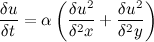
The assignment was to use each language to write a program that discretizes and solves the heat equation in two dimensions:


We were to achieve this using stencil updates; as an example, an interior update example from timestep t to timestep t+1 is shown below for the point e).


Basically, it allows us to roughly model solutions to a parabolic partial differential equation that describes the way heat spreads through a 2D domain over time (shown above), without violating special relativity (I promise there's a pretty picture at the end of this post).

I  did this in C somewhat kludgily with a 2D struct and a 3D array, using separate functions for I/O. In Fortran, things were smoother. I used a module containing a derived-type 3D array and I/O subroutines. To see the source files, check out REDACTED (will post after due date).

So essentially I want to illustrate to you here how heat spreads out from a single constant heatpoint in a 2D domain, as modeled by my own code; for simplicity, lets make our domain a 9x9 grid where the center point (4,4) has a constant temperature value of 10 units. We are going to run my C program and ask for the temperatures of each point on the grid for 500 timesteps.
 

In the above, heat-sample.inp shows the input file, and output.txt shows the output. We can use awk to parse it (right now the output is 40,500 lines). We want gnuplot to give us a heatmap of these values every 5 timesteps from 0 to 500, so we can visualize the heat spreading outward from the center of the domain. The following awk command says, amazingly, "look in column 3 of file output.txt and create separate files named out1, out2, etc. for all rows in output.txt that have the same value for column 3 (which is timestep)." This command splits the big output file into files with the data at each timestep. Then gnuplot can loop over all 500 files, plotting every 5th one, and create an animated .GIF like it's nothing:


Here's the file "animate.gif", our final product:


Over time, we see the constant, central heat point (yellow) warming up the entire 2D surface. This is my code in action! How about that! It really drives home the fact that a pretty graphic is actually just the dance of bits and addresses with a pixel mapping.

Monday, March 10, 2014

Mindset? Intelligence? Politics?


The impetus for this post may seem unrelated to the bulk of the thing, but I try to tie up all the loose ends at the end. I started writing this because I am frustrated with how political/philosophical discussions are very rare, invariably contentious, seldom fruitful, and almost never worth having... and how almost any conversation I have (outside of a classroom) is thereby reduced to routine pleasantries, empty courtesies... just wasted time and wasted breath. But before I could adequately address this, I realized that needed to talk in some detail about attributions/mindsets, intelligence qua situated cognition, and politics qua rooting for your favorite team. This is a loaded post, and in more ways than one (see the title).

Do you believe that a person's basic abilities---e.g., their intelligence, their talents---are fixed traits? That people possess a certain amount of intelligence, say, which is more-or-less stable across the lifetime? Or do you tend to believe that these qualities can be developed through effort, good teaching, and persistence? That everyone can have these abilities and achieve if they work at it?* It may surprise you that the former outlook, termed a "fixed" or "entity" mindset, is endemic in America today, while the latter, a "growth" or "incremental" mindset, is more common in collectivist cultures. This distinction is championed by psychologist Carol Dweck, whose research on this subject been widely influential in recent years.

Because we often don't have any conscious awareness of our mindset, it is tough to make a candid determination and usually requires some roundabout self-experimentation. Here's a quick gauge: when you experience failure, how do you take it? Just imagine past failures and try to remember how you responded at the time. Did you react strongly (inwardly or outwardly), become despondent, or give up quickly upon experiencing difficulties? Did it bother you so much that you refused to even acknowledge the failure, effectively convincing yourself that it never happened? Do you dread failure, even now? Do you spend a lot of time trying to appear smart, capable, talented, etc.? When you were a child, were your cultural spokespersons (your teachers, your parents) telling you things like "you're so smart, you're so talented, so this and so that" instead of "you worked so hard, you learned so much, all that practice really paid off!"

If your answer was "yes" to any of the above, chances are good that you, like me, have a "fixed" mindset. It is our unconscious tendency to interpret our successes and failures as evidence either supporting or disconfirming our possession of certain "abilities". To someone with a fixed mindset, if you fail at something, you are probably bad at it. And while this may sound somewhat reasonable on the face of it, such a policy can be extremely pernicious. Imagine young schoolchildren all across the country who, upon receiving poor scores in math, have learned it's OK to simply repeat the culturally normative, socially acceptable phrase "I am bad at math." The fixed mindset breeds and perpetuates a crippling cycle of defeatism; when you get a bad math grade and say "I got this grade because I am bad at math," you are telling yourself that trying to improve would be pointless. After all, you are "bad at math." That's just who you are, and there's nothing you can do about it. But then, when your next grade is just as bad because you didn't put forth any effort, all you see is more evidence that you really are bad at math. "See, another bad grade. I told you that I'm not a math person!" Though it may sound eerily familiar, this sort of thinking can have tragic consequences: when people start attributing negative outcomes and experiences to internal, stable, personal factors, they come to believe that they are powerless to change their situation. They have slowly convinced themselves of their permanent helplessness, and they make no attempt to better their circumstances.

I've taken math as my pet example for fixed-mindset here because these delusions are nigh ubiquitous. In the United States, most people believe that only a few "gifted" individuals "have what it takes" to learn math, and that hard work can't compensate for this. To someone with a growth mindset, however, failure just means that you need to improve. Studies have shown that, when asked to explain why some children do better in math than others, Asian children, teachers, and parents point to hard work, while their American counterparts point to ability. But this post isn't about math; it should be obvious by now that mindset influences almost every aspect of a person's life--especially how they face challenges and cope with setbacks.

Another familiar hazard of the fixed mindset is something called the fundamental attribution error, the almost universal tendency overemphasize the role of someone's personal traits---their disposition, character, or personality---when explaining their behavior. For example, if someone walks by with an unfriendly phiz, we are more likely to think "that guy's an asshole" than we are "that guy's having a rough day." As a species, we find it easier to think in terms of fixed traits than in terms of situational factors... static adjectives and nouns (e.g., "smart person") make for easier mental labeling  than do dynamic verbs ("worked hard"). Entity attributions like "I am an intelligent person" are difficult to maintain in the face of difficulties, whereas growth attributions like "I succeeded or failed because of my effort" place greater responsibility on the person-in-situation and lead to greater motivation.

To get a little meta for a moment, saying things like "I have a fixed mindset" is totally diagnostic of a fixed mindset... if you believe that it cannot be changed.
While acknowledging your mindset doesn't confer any immediate immunities---I'm as guilty as anybody of misplaced attributions---but it can change your perspective on things like intelligence, ability, and talent. These are sensitive subjects, particularly when conceived of as deterministic traits in a larger dialogue framed in terms of individual/group differences. The chief limitation comes from the tendency to think of people and situations as independent entities rather than seeing people-in-situations as integrated systems; this attitude leads us to look for talent/intelligence/ability in the heads of those we consider talented, intelligent, and able, which is flagrant dualism-- completely circular logic hobbled by the fetters of fixed mindset. Some hallmarks of this conception, which is as widespread as it is outmoded, are sayings like "there's a birth lottery for intelligence" or "a study proved that the heritability of IQ is 95% such-and-so."*

So the traditional notion, the commonly held belief that some people are "smart" while others are "dumb", is strongly echoed by the "find the gifted child" model of talent development. I want to share with you a supremely apropos account of a student who was selected to attend an intensive academic summer program for "talented" students. This program was designed around progressive educational strategies which emphasized collaboration, discovery learning, and creativity. Despite the fact that she was a model student and by all accounts highly intelligent, her performance in the program was extremely poor and her social interactions deteriorated. Discussions with her concerned instructors revealed that she was completely out of her instructional element! She was very uncomfortable in this classroom full of bright suburban students, and she had a strong preference for the lecture format used in her high school. In the traditional conception, her performance (in a technologically rich, well-designed curriculum) was below average, and therefore she had low ability. After adjustments were made to address this, her performance improved significantly. Thus, a better explanation of "ability" here is that her potential to act was a poor fit for this specific environment, and as a result the person-situation interaction did not support the emergence of "talent".

The point is that people perform differently in different settings! To take another striking example, the Adult Math Project (Lave, 1986) found that during price arithmetic calculations, shoppers almost never made an error, while the same individuals averaged only 57% correct on comparable math problems in a testing situation. The reason for these differences, in Fancy Jargon, is that different features of the environment afford activities for an agent who has appropriate effectivities. Just think about how differently you perform when you are in comfortable, familiar situations versus when you are in uncomfortable, unfamiliar ones; intelligence is not a thing that you possess, but a thing that arises from the dynamic transaction among the individual, their previous experiences, their physical environment, and the sociocultural context.
 "A learner's ultimate understanding of any object, issue, concept, process, or practice, as well as her ability to act competently with respect to using these, can be attributed to, and is distributed across, the physical, temporal, and spatial occurrences through which her competencies have emerged" (Barab and Plucker, 19xx).

I'm pretty far afield already, but think for a minute about the instructional implications of all this. All too frequently, the learning taking place in a classroom context contributes to knowledge that is inert during interactions outside of the school walls. Fortunately, there have been movements that stress ongoing participation and aim to develop contexts within classrooms that aid students in learning the material in a manner consistent with those situations in which they would use the material outside of school.

OK, wait, so what was the point of all of this about mindsets and attributions if I wanted to talk about how people discuss political and philosophical topics? I believe that the fixed-mindset perspective has grim implications for the way people discuss, debate, or otherwise compare their ideas. Concretely, if I assert something in front of fixed-mindset folks, then the idea or belief I have articulated is assumed by default to be some fixed and immutable aspect of me, with people either becoming supportive or defensive depending on whether they agree or disagree. In these interactions, we assume that the other party is unwilling, perhaps even unable to change the belief they just expressed, when in fact they may feel no strong attachment to any of their beliefs... I know that countervailing evidence could cause me to change a false beliefs in an instant, even if it's a false belief I happened to have been proud/fond of. When someone brings up their ideas, beliefs, or pet theories, they are not necessarily aggressing or competing or initiating a stand-off... when I bring up my feelings about a political issue, I am not marching my views forth like soldiers into battle; I am submitting them to you as incomplete-yet-personally-compelling hypotheses that I want new/different perspectives on. Views that I want your perspective on. Yet people become automatically, acutely, viscerally defensive, because they identify so strongly with their mostly arbitrary belief system... "I was raised a Libracratic Conservican, therefore the things I believe are A, B, and C!" ...and they assume that I must likewise be passionately attached to my own. Saying something that might be inconsistent with A, B, or C is tantamount to declaring war on their side, because the American way is to reduce even serious issues like ethics and governance to games of sport. Instead of having a rational discussion, we can mindlessly scream Go My Team! Boo Your Team! and feel like we've actually accomplished something.

So just because you hear me say "I think X, Y, Z", please try not to create a mental model of Nathaniel that has X, Y, and Z fixed beliefs. I believe in nothing 100%, I try to have no irrational attachment to my beliefs just because they are my beliefs, and I relish adopting new beliefs when compelling arguments are available.


*Nota bene: I am NOT asking for your opinion on "Nature vs. Nurture", which is an over-hyped and unproductive false dichotomy. If you actually know what you're talking about---e.g., no anecdotal assertions about your family, etc.---and are prepared to discuss norms of reaction and phenotypic plasticity, then OK we can do that sometime.